
Mobile coverage for retail stores, warehouses and car parks
Big floors, metal roofs, high racking and concrete undercrofts are where mobile signal gives out. When it does, EFTPOS terminals, scanners, staff phones and customers all lose service.
Why large floors lose signal
The problems are predictable. Where they appear, and how badly, is what the survey measures.
Metal roofs and tilt-panel walls
Steel and concrete block most of the signal from outside, so the middle of the floor is often the weakest point.
Racking, cool rooms and back of house
Stock, shelving and insulated rooms create shadows even where the shop floor is acceptable.
Undercroft car parks
Below-ground levels and ramps often have almost no signal at all, which matters for customers and for safety.
How we cover a large floor
Fewer, better-placed antennas. High-gain panel antennas throw coverage a long way in one direction, down aisles and across car parks, so a large floor needs fewer of them than ceiling domes.
- Panel antennas on the roof structure aimed down the long axes of the floor and the car park.
- Ceiling domes only where they suit: offices, back of house, lobbies and plant rooms.
- CEL-FI QUATRA for the largest floors, with coverage units on high-level cable tray.
- GO G41 repeater hubs for smaller stores, multi-level developments and car park levels.
- Work around trading hours, with high-level installation planned for when the floor is quiet.
Measured in a real warehouse store
A large Victorian warehouse store upgraded to CEL-FI QUATRA 4000e with panel antennas. Before the upgrade, signal in the middle of the store was −97 to −103 dBm. After commissioning, all 27 test areas, nine per carrier, measured better than our −95 dBm coverage target.
- 27 of 27
- Test areas better than −95 dBm across Optus, Telstra and Vodafone (report criterion: −105 dBm)
- −88.5 to −67
- dBm range measured across all test areas and carriers after commissioning, June 2026
- −95 to −70
- dBm range predicted for the sales floor at design, July 2025
Retail projects
A warehouse store, a new retail development with an undercroft car park, and and two liquor stores. Client names are withheld.
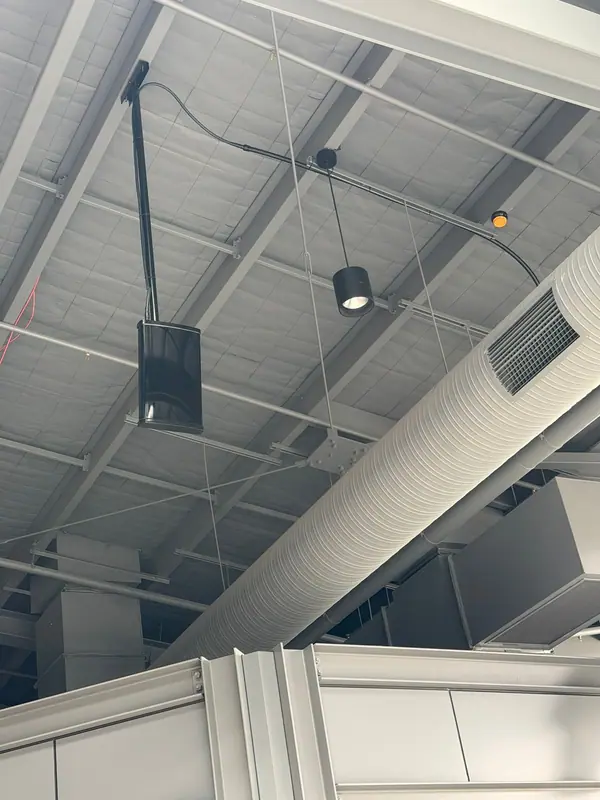
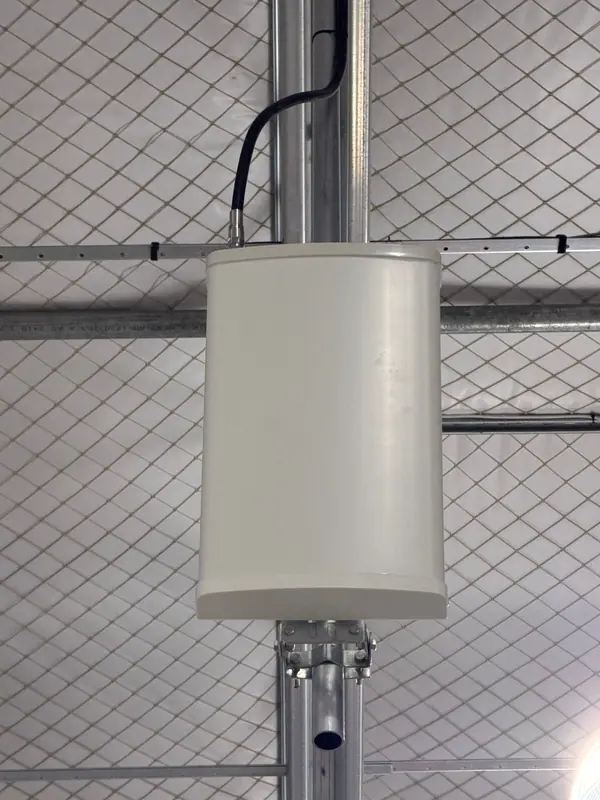
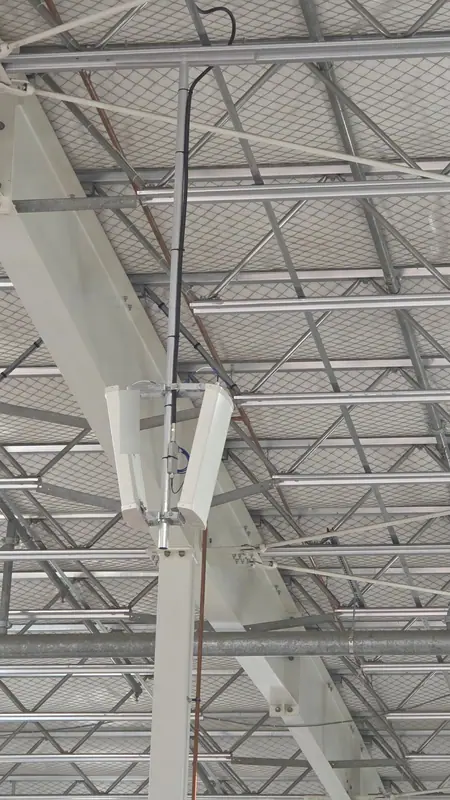
Left: a directional panel antenna in a high-bay retail ceiling. Right: a panel antenna on a drop pole below the warehouse roof.
Single stores, too
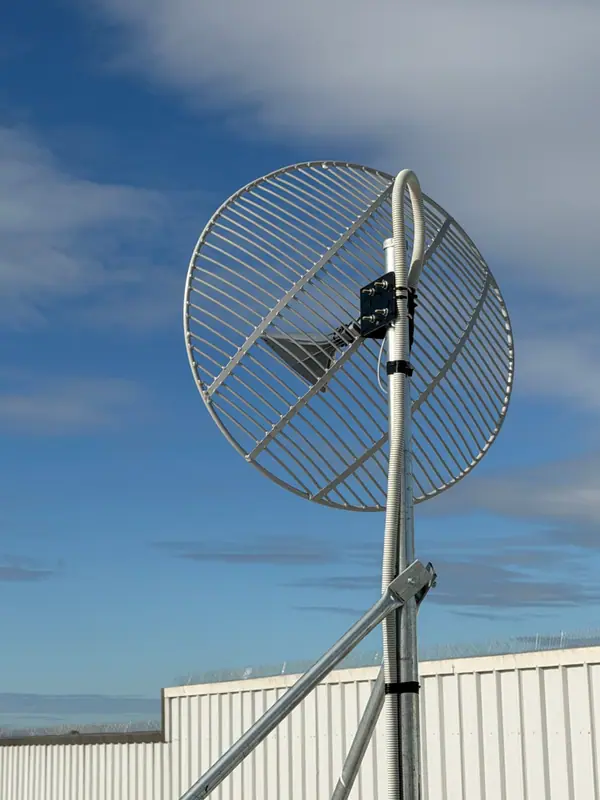
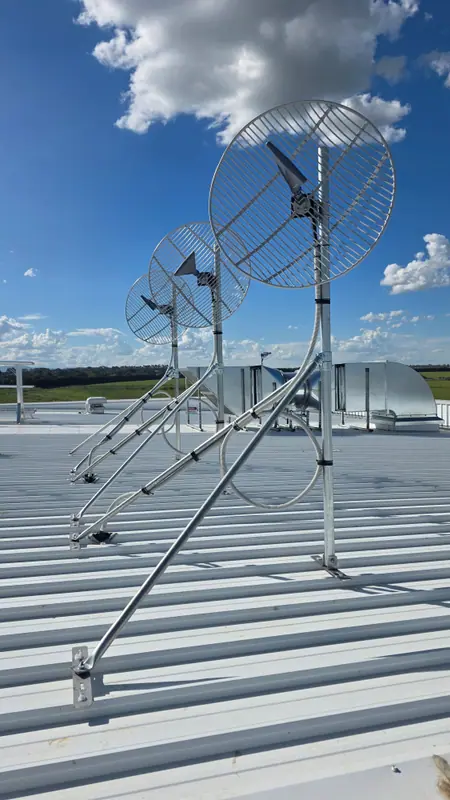
Not every retail site is a warehouse. In liquor stores in Western Australia and Tasmania, one Proeye repeater hub with a CEL-FI G41 module each for Telstra, Optus and Vodafone, fed from rooftop grid donor antennas, covers the whole store: ceiling dome antennas on the shop floor, and panel antennas in the stockroom and walk-in cold room.
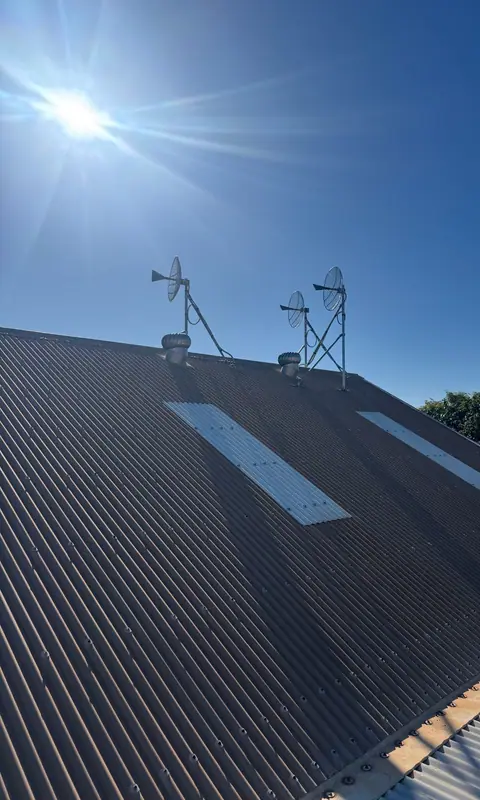
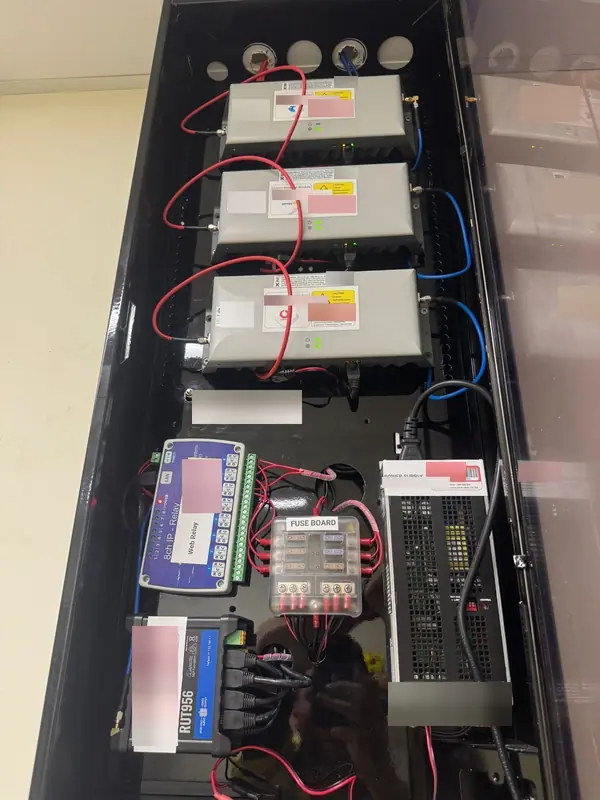
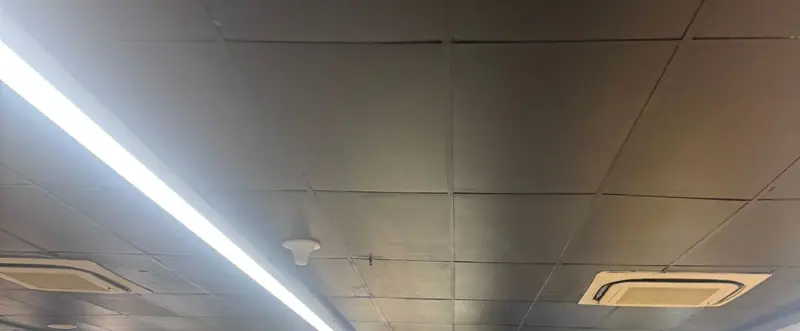
Western Australia: rooftop donor antennas, the repeater hub and a ceiling dome antenna on the store's black ceiling. See the project
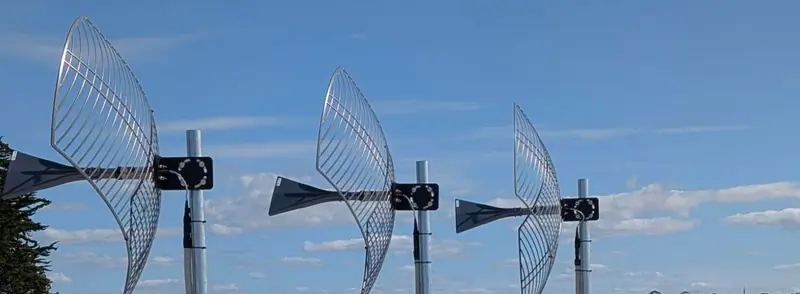
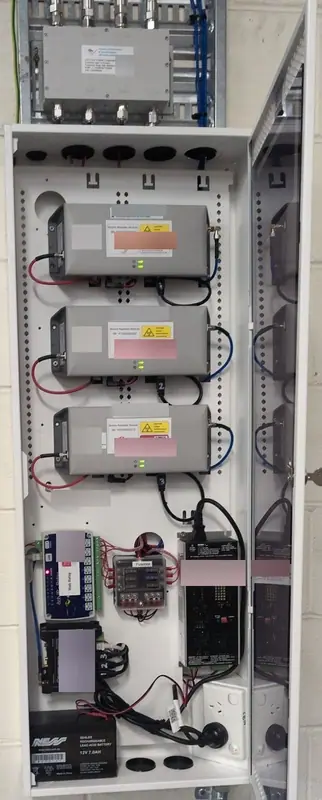
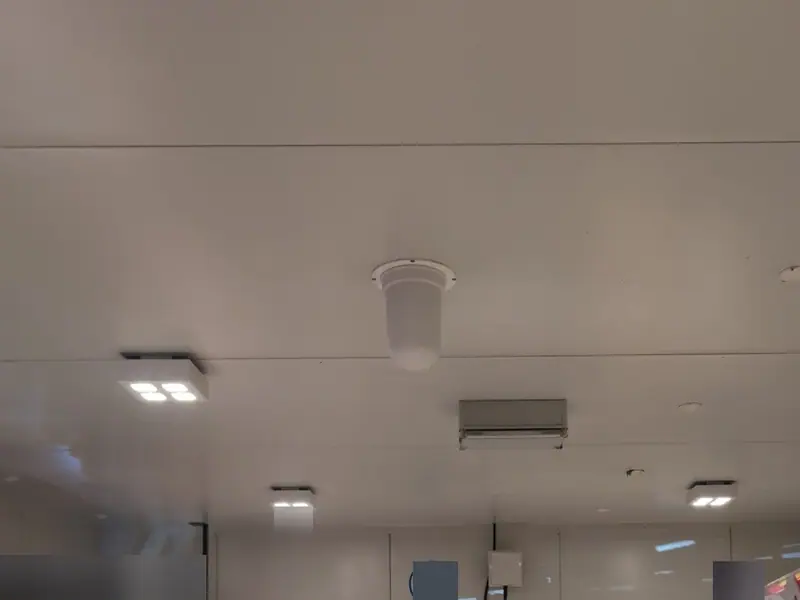
Tasmania: rooftop donor antennas, the repeater hub and a ceiling-mount antenna in the walk-in cold room. Site labels and asset tags are redacted, and the stores are not named. See the project
See an installed retail system
For suitable prospective clients, we may be able to arrange a visit to an existing retail installation in Victoria: a new retail development or a warehouse store.
Visits are available on request and depend on the site owner's permission and access arrangements. We never identify our clients without their approval.
About site visitsRetail and warehouse questions
Can you install while the store is trading?
Yes. Installation is planned around trading hours and access, and high-level work can be scheduled for quiet periods or after hours.
Will a DAS fix EFTPOS and scanner dropouts?
If the devices rely on mobile data and the problem is weak indoor signal, better coverage usually helps. The survey confirms whether signal is the cause; capacity and the devices themselves also matter.
Can the car park be covered from the same system?
Yes. We recommend either a CEL-FI G41 system or a CEL-FI QUATRA system, depending on the size and scale of the coverage required. On a new retail development, for example, two Proeye repeater hubs with CEL-FI G41 modules cover both the store and the undercroft car park beneath it.
Is signal letting your store down?
Start with a free initial desktop analysis. Send the address, floor plans and where reception fails.